Thoughts

State of Energy & Change

You’re taking a pleasantly hot afternoon stroll with a little time on your hands, and you come across a table with a couple of people offering you a free beverage if you’re willing to help them out with a small survey. You see the survey is only a few questions and is anonymous, the juice looks good, so you agree. After completing the survey, they offer you one of two beverage choices: a mint-ginger-acai juice, or a strawberry lemonade. Both are in glasses that are sweating from the cold and look delicious, which one do you choose?

A similar activity was performed as part of a behavioral economics study to try to understand people’s openness to new experiences compared with the amount of change they were experiencing in their lives. Those that had recently moved, changed jobs, or experienced other large changes more often chose the mint-ginger-acai instead of the strawberry lemonade. Those with more constancy chose the opposite.

This surprised me. Why would those with so much uncertainty gravitate toward something more uncertain? When we’ve attained some sense of comfort, it’s easy to simply try to maintain that and not to explore something new and uncertain. Without a doubt, change is stressful, but with it, we open ourselves to entirely new experiences in life.

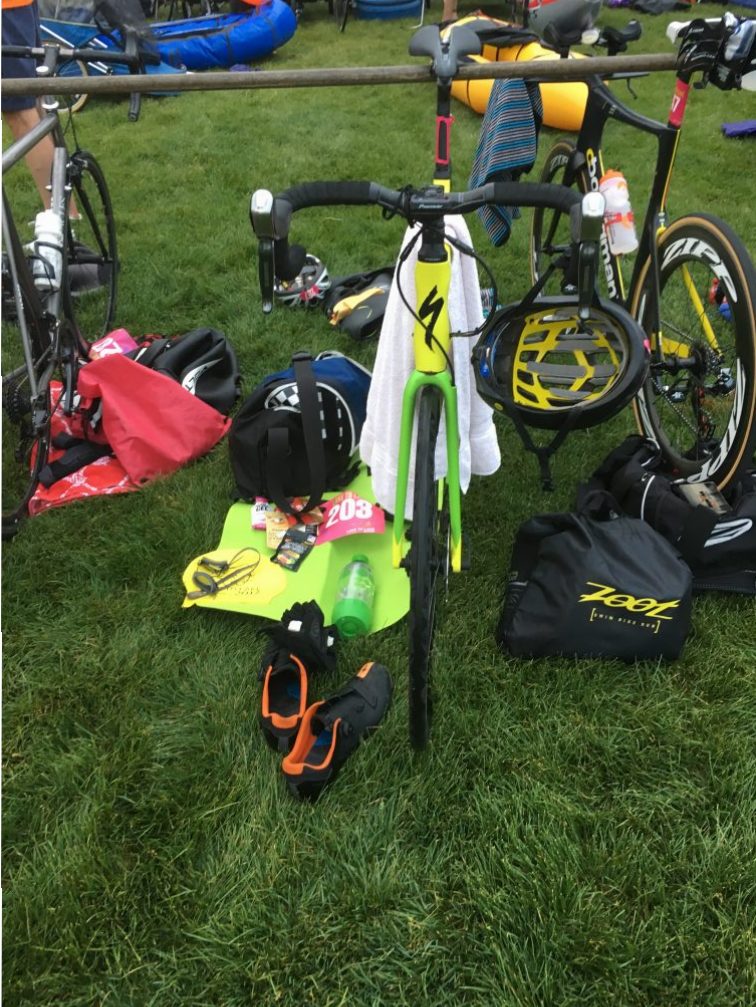
(Photo Courtesy of Len Wick)

Where Chocolate Goes to Die

Perhaps no one is like my wife and me, but we have a place in our pantry where chocolate goes to die. Actually, for quite some time, we had a place where all snack food would go to die. We would eat most of a particular snack food, but then since no one wanted to finish it (because then we wouldn’t have any more), it would get placed in a particular pantry that I called “The Snack Graveyard”. Turns out this is a fairly common human trait.

The New York Times had an article on this tendency: Carpe Diem? Maybe Tomorrow. They say:

Once you start procrastinating pleasure, it can become a self-perpetuating process if you fixate on some imagined nirvana. The longer you wait to open that prize bottle of wine, the more special the occasion has to be.

Unfortunately, we overestimate the pleasure we will get from big enjoyable experiences. We are better off enjoying small pleasures throughout our life: eating a nice chocolate, buying a nice smelling soap, or splurging on nice dinner out. The sum of these will exceed the pleasure we get from buying a new house or a new car. So instead of procrastinating a small pleasure, consider whether now is a good time to savor life.

You Can’t Think Your Way Out

You’ve come down with a serious cold. You feel miserable. You start trying to figure out who or what gave you this cold: Was it not washing your hands after that bus ride? Was it that guy that coughed on you while you were standing in line to get groceries? We all want answers to these questions. We’re also good at concocting explanations for why something is the way that it is.

Unfortunately, most of the time we don’t have nearly enough information. That doesn’t stop our emotions from telling us that we need to avoid whatever caused this, so our intellect works overtime trying to figure it out. But you can’t think your way out. No matter how hard you try, your brain doesn’t have sufficient building blocks to reconstruct the explanation with any form of certainty. The result of this is two-fold. First, we waste a lot of energy seeking an explanation this forever alludes us. Second, when our brain gets tired, we might settle on one or more of our explanations, creating needless fear about something innocuous.

It isn’t just explaining past events that create this situation. We also face this when making a very difficult decision about our future. We collect data. We think through pros and cons. We think through the possible outcomes and try to assess the statistical risk. But in the end, there is no assurance, no simple solution, no “right” answer.

In either case, we have to recognize our own limitations — to admit that there are some things, we will simply never know. Recognizing this can let us move on to things that we can impact. We stop trying to reach perfection in our decisions (or explanations) and start focusing on what’s next. We make the best decision we can, and trust God with the result.

Our ability to think is an amazing gift and we should use it to the best of our abilities but it is finite. You can’t think your way out of every problem.

The Fear of the Remembered

It’s amazing to me how many people worriedly ask me about the safety of our living in Mexico.  Yes, Mexico has lots of news of drug wars, kidnapping and murders. Each of these events is tragic as well as memorable.  This is why it casts a shadow on the entire country. In Guadalajara, where we live, it feels as safe as any urban city in America and in many respects safer. The reason people fear Mexico comes mostly from something called the Availability Heuristic: We associated the chance of something happening with how easily we are able to recall an incidence of it happening.

For example, newspapers reported recently that 16 people died at the Love Parade [a huge electronic music fest in Germany] this year by being trampled to death. Scary! You can imagine worried parents urging their children not to go next year. Of course, when you think about it, there were 1.4 million people there so the chance of dying at the Love Parade is roughly 1 in 100,000.  Compare that to the odds of dying in an automobile accident in a year: 1 in 6500.  Yet how many parents urge their kids not to drive?

The problem with worrying about the things we most easily remember is that they are not worth worrying about and distract from other important things in life. This is the root of terrorism’s power.  Create a powerful, tragic, easily remembered incident and people will live in fear.  Governments will go to ridiculous lengths to protect from these things happening again, detracting attention from better ways to improve security.

Fears are most often countered by experiencing the event without anything going bad.  People feel safer near the place where they live day to day, and yet are petrified of some other place even if statistically it’s safer.  My parents were living in Israel for some time and they visited Afghanastan.  While they were there, they talked to some local Afghan’s who said, “You live in Israel! How could you live there?! It’s so dangerous!”.  This coming from people who are living in a country that has been at war for decades.

Our fear is heavily affected by tragic horrible stories that we remember rather than reality. So when you’re tempted to be afraid of some tragic thing on the news, you should stop and consider whether the fear is justified, or if you are falling prey to the availability heuristic.

Life By Autopilot

We live in a highly complex world but with a very limited amount of focus. This limits the amount of conscious decisions we make. The rest of our life runs in autopilot: we decide not to decide. This, as it turns out, is our default choice. It’s why states that require you to opt-in for organ donation have significantly lower participation than states where you opt-out. How many of us want to actively decide on where our organs go after we die?

As discussed in the commencement speech I linked to in my last entry, we can choose what we think about. Everyday thousands of things scream for our attention. By default, we think about the loudest of those things and the rest are decided on without thought. We simply use our autopilot.

Living life without challenging the autopilot will result in moments of surprise. Drown by the urgent, we occasionally gasp wondering how we got here. Unfortunately, the autopilot doesn’t sound alarms for significant things: autopilot will happily crash into a mountain it doesn’t know is there.

It’s easy to let our autopilot make the hard decisions and instead focus on the things that seem more fun at the moment. However, our health, relationships, and life are far more impacted by our default actions day-in and day-out, than they are by a brief decision to do something different once. Reflecting on our own autopilot can teach us ways to specifically improve it, and over the years, this can make all the difference.

Have you considered whether your autopilot is making the right choices?

Scripting Life

Have you ever considered how the various roles in your life mimic a screenplay?

A friend of mine is teaching me his method for Designing a Balanced Life. This week, we discussed the roles that each of us play in our lives and how they interact. Previously, I’ve considered my various roles, but I found his method more effective: instead of only naming the role, he introduced the analogy of planning your week as a way of scripting life among the various characters that represent your roles.

In this context, your roles transcend a simple name; instead you flush out each of these roles as characters in the script of your life. Just like you get to know characters on a sitcom or in your favorite novel, so the roles in your life have their own unique aspirations and personalities. When your roles are working in concert, your life is a well written drama: They work in concert when the director directs.

I find that planning your days or weeks as though you were directing your drama compelling, and I thought you might benefit from it as well. Let me know what you think.

When Your Brain Fails – Nodding Off

Yesterday late in the afternoon, I was providing a demo of our product in a warm conference room. The person I was showing it to started nodding off. Now this wasn’t a case where there were a lot of people, there were only three of us and he was asking us questions in between his long “blinks”. I might have been offended, except it reminded me of one of my own more embarrasing moments.

Several years ago, I took a day trip that required me to leave very early in the morning. I showed up for a morning meeting which went fine. We ate lunch together and then just three of us were talking about strategy. These were not people I knew very well and I was trying to participate to the best of my abilities, but I hadn’t had any coffee and was very tired. All three of us contributed to the conversation, but I could not stay awake. I would close my eyes while listening then before saying something, think whether or not the statement I was about to make made any sense. I could tell that the other two knew I was falling asleep as when I opened my eyes they were smirking, but then  I continued to think, okay, now I’ll stay awake, only to close my eyes again.

The problem is that when you get that tired you do not think: “I should stand up and move around”, or “I should take a break and go find a cup of coffee”. Instead your brain thinks things like: “It won’t hurt to close my eyes a little bit”, “I’m just listening with my eyes closed”.

We play games with our head not wanting to just admit that we’re tired, and instead we try to figure out how to play it cool. The problem is that when our brains are very tired we don’t think rationally but we can’t recognize that we aren’t. So I leave this as a personal lesson learned, if you start taking extended blinks, bite the bullet, stand up and go splash yourself with some water, or just take a break for a moment and go for a walk — better this than pretending no one is noticing that you’re sleeping.

The Difficulty of Imagining Other’s Perspective

In spite of an overwhelming group of people communicating their personal perspective on the internet, it still remains nearly impossible for us to understand how others see the world. We experience our lives in vivid 3D with a depth of emotion and experience that makes our perspective seem obvious. Meanwhile, we experience other’s perspective with the emotional depth of a government fact sheet.

As a result, the act of empathy is very difficult, and yet incredibly important. If we seek to communicate, help, and live with others in harmony, we must seek to understand how they experience life. This is important not only in our relationships, but also in how we create value for our customers. Companies should design products in a way that comprehends their user’s perspective, and yet sometimes the customer approaches your product in a way you never expected.

Recently, I came across two blog entries, written by experts in designing user interfaces, relating their frustrating experiences:

  • Receipt Woes – Discusses the poor wording when the credit card machine prints two identical receipts but still has the text as though it was a carbon copy (i.e. Top copy – restaurant, bottom copy- customer). However, since the receipt was printed twice, they are identical put next to each other, so which one is the top copy?
  • Turbotax Fail – Discusses how repeat Turbotax customers want to use their information from the previous year’s return – but the first dialog box that shows up makes it impossible to do this as the first step (even though it seems as though you could).

In both cases, my first reaction was to question: Why are they complaining about those things? They both seem trivial and non-confusing to me. This is because my perspective always seems obvious to me. What’s more, before hearing of this confusion, it would have been difficult for me to even imagine that this caused people consternation.

Yet, here are two experts chastising the companies for their poor product design. So how does one challenge their own “obvious” perspective? The only way to do so is to ask questions whose answer seems obvious, but may illustrate the differing perspective of others. For example, the Turbotax designer could ask several repeat customers, “What is the first think you want to do after installing Turbotax”? When someone surprises them by saying “import last years return” instead of “start a new tax return for this year”, they learn something that they could not have discovered any other way.  The result is that this makes their product more usable by everyone.

The challenge in designing products is not only imagining what others might do and empathizing with them, but also asking questions that challenge what you are capable of imagining. These questions may seem obvious, but in the answers, you are able to learn more about how others see the world than in any other way. This is true both in product design as well as in relationships.  We must challenge how we see the world in order to better serve those around us.

Serendipity, Making Friends and Marketing Adages

“I know I’m wasting half of my marketing budget, I just don’t know which half” – Old Marketing Adage

Over the last several years, we moved to several different locations throughout the world. While we obviously enjoy the adventure of travel, one of the challenges we face is meeting new friends. In each locale, the people that live there already have satisfying relationships with others, as a result, they aren’t looking for new friends — it’s not that they actively reject new friends, but they don’t work to find them. As a result, the onus for making new connections falls on us, not only to seek out opportunities to meet people but also to initiate strengthening the relationship.

Today I was thinking that there is a lot of similarity between the marketing adage above and building relationships.  I know that half of the time I spend finding friends won’t result in a friendship, but I don’t know which half.  Serendipity is involved — being in the right place at the right time with the right person. It’s emotional labor facing rejection, and it can feel like it isn’t worth the effort, but then suddenly, when you least expect it, you stumble upon a group of people that you can really related to.

Investing even without knowing whether it will pay off is a strategy that applies to many things, including all of the relationships you currently have. Normally, no single time together makes or breaks a relationship, but the sum of all of the things done together does have a big impact.

So if you’re just trying to find people that you like, keep looking even when it doesn’t seem to be having much effect.  If you’re well established, look for how you can invest in your existing relationships.  We may not know what half of the effort is most important, but in the end, the payoff is always worth it.

Political Corruption and Cultural Inertia

One of the more common topics of discussion here in Mexico is government corruption. It is a widely held belief that those with power abuse it for their own ends. Complaints abound but with no solutions.

I think that cultural inertia plays a role — other people’s perception of our behavior affects the way that we actually end up behaving. Corruption clearly occurs in every government, but the public perception of the commonness of that corruption propagates it.

For example, in America, even though we may not like every police officer, we very much expect them to honest and upright. If a police officer is not, the public outcry is loud and a harsh punishment comes swiftly. The result is that many policemen take pride in their integrity because it is part of everyone’s perception of their job.

In Mexico, however, the populous starts with the assumption that if you are a policeman, you are likely corrupt. This significantly reduces their resistance to temptation. If they do what is right, it doesn’t change the perception of their job. So when temptation comes, it’s easy to live down to the public’s expectations, and give in — after all, everyone else must be doing it, or there wouldn’t be this perception.  Ironically, it tends to be the public that offers the greatest opportunity for temptation.

Clearly, there are many corrupt people in power in the US and there are many high integrity people in the Mexican power hierarchy, but the public perception of those in power can indeed influence their behavior.

This idea is supported by several behavioral economics studies discussed in the book Nudge [which I recommend]. In several studies, they found that by merely suggesting things like: “The majority of teenagers choose not to smoke”, or “97% of taxpayers pay their taxes honestly” changes people’s perception of what others are doing and thereby changes their own. In the end, the only way to end corruption is to work toward changing the popular perception of those in power. Clearly, not an easy thing to do. But a very good example of a self-referential cycle that is difficult to change because of Cultural Inertia.

[Read the Related Post: Cultural Inertia].